
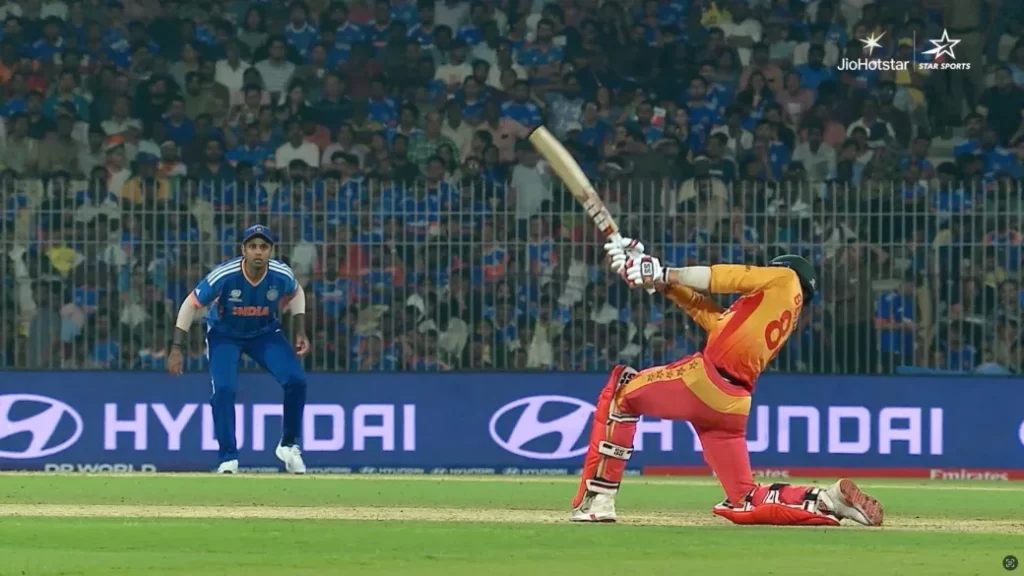
India may have secured a commanding victory over Zimbabwe in Chennai to keep their semi-final hopes alive, but not everything is settled within the camp. Cricket legends Anil Kumble and Faf du Plessis have pointed out a potential weakness that stronger teams could exploit — the sixth bowling option.
While the scoreboard reflects dominance, tournaments like the T20 World Cup are rarely won without balance and clarity. India’s win looked convincing on paper, but when South Africa managed to recover from 20 for 3 to post a competitive total earlier in the tournament, questions naturally surfaced about India’s bowling depth.
At present, India’s five frontline bowlers — Arshdeep Singh, Jasprit Bumrah, Varun Chakravarthy, Hardik Pandya, and Axar Patel — form a solid core. However, T20 cricket demands flexibility. When conditions are flat and batters are aggressive, five options may not be enough.
That is where the concern begins.
Shivam Dube has largely operated as the sixth bowler, with occasional overs from part-time options like Abhishek Sharma, Tilak Varma, and Rinku Singh. While Dube has managed to pick up wickets, his economy rate has been expensive. On batting-friendly surfaces, opposition teams are likely to target him deliberately.
Kumble highlighted an important tactical factor: on flat pitches, teams prefer the comfort of eight strong batters rather than playing seven batters and relying heavily on five specialist bowlers. This balance becomes crucial during high-scoring contests. If one bowler has an off day, the captain must have a reliable alternative — not just a part-time filler.
Du Plessis agreed and went a step further. From an opposition strategy perspective, teams will naturally aim to negotiate India’s biggest threats first — especially Bumrah and Varun Chakravarthy — and then accelerate against the weaker link. In modern T20 cricket, match-ups dictate momentum. If a team can survive Bumrah’s overs and line up the sixth option, the pressure shifts instantly.
This becomes even more critical with India’s upcoming clash against West Indies cricket team, a side known for explosive power-hitting. West Indies have already shown their batting strength by posting massive totals earlier in the tournament. Against such opponents, one weak bowling slot can tilt the balance quickly.
Another talking point raised by du Plessis is role clarity within India’s batting unit. India have experimented with their playing XI in recent matches. The inclusion of Sanju Samson to balance the top order, shifting Ishan Kishan’s position, and pushing Tilak Varma down the order are signs of tactical flexibility — but also possible uncertainty.
Tilak’s explosive unbeaten knock against Zimbabwe proved his adaptability. Yet frequent changes can sometimes blur defined responsibilities. Successful T20 teams often thrive on stable roles. Players know exactly when to attack, when to anchor, and when to finish.
Kumble emphasized that while India possess a long batting lineup — even someone like Axar batting at No. 8 — clarity remains essential. A deep lineup is valuable only when every player understands his purpose. Constant reshuffling, though strategic at times, may disrupt rhythm.
From a Cricket Betting Tips perspective, these small structural nuances matter immensely. In the Cricket Betting Tips 2026 game, surface conditions and team balance often influence outcomes more than individual brilliance. For followers who maintain an Online Cricket Id, analyzing bowling depth and role stability can provide sharper insights before high-pressure knockout matches.
For example, if India play on a slower surface, five specialist bowlers may suffice. However, on flat tracks where 200-plus scores are realistic, the sixth bowling option becomes a tactical target. Opposition analysts will already be mapping this scenario.
At Cricket Betting Tips, we always stress evaluating match context beyond headlines. A big win does not automatically eliminate structural concerns. India’s victory showcased their batting firepower, but tournaments are about peaking at the right time with the right combination.
Hardik Pandya’s dual role as an all-rounder offers some cushion, but if Dube continues to concede heavily, management may need to reconsider combinations. Bringing in an additional bowling all-rounder or adjusting the balance could be options.
The beauty of T20 cricket lies in its unpredictability. A single over can change the course of a match. That is precisely why depth and defined roles are so important. Teams that plug small gaps early often avoid heartbreak later.
As the semi-finals approach, India’s think tank will likely review these tactical elements carefully. With experienced voices like Kumble and du Plessis highlighting the issue, the spotlight on the sixth bowling option will only grow stronger.
For cricket enthusiasts and strategic followers of the Cricket Betting Tips 2026 game, this phase of the tournament is crucial. Smart observation, pitch analysis, and understanding team combinations can make a meaningful difference when managing your Online Cricket Id responsibly.
India undoubtedly remain one of the strongest contenders. Their batting depth, star power, and frontline bowling attack are impressive. But in high-pressure knockout cricket, even minor vulnerabilities can become decisive.
The coming matches will reveal whether India can fine-tune their balance and bring clarity to their roles. In T20 cricket, success belongs to teams that leave no loose ends — especially not a sixth bowling option waiting to be targeted.